Author Archives: Stephen
Forces & Change in Motion Resources
As the Grade 10 classes end the content of the unit this week, the resources have been updated and uploaded to the class unit page here. When we return from the holidays, we will review the content of the last two units, complete a short unit test and start working on our One World/Communication in Science assignment “Acceleration Kills”. If you think of any good ideas for topics when you’re away on the break, keep a note of them. Otherwise, have a good holiday!
Here’s another Veritasium video to make you think:
Embryonic Stem Cell Patents Banned in EU
Yesterday, the European Court of Justice banned the issuing of patents for embyronic stem cell research, stating:
“A process which involves removal of a stem cell from a human embryo at the blastocyst stage, entailing the destruction of that embryo, cannot be patented.“
The decision has caused widespread concern amongst European stem cell researchers, yet has been welcomed by other groups on moral, ethical or religious grounds.
So why is it such a hot topic?

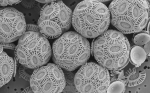
Human Embryonic Stem Cells (Nissim Benvenisty, via Wikimedia Commons)
Use the resources here, and others that you can find, to discuss the following questions in your group. Be prepared to feed back to the class with a summary of no more than 5 minutes.
- What are (embryonic) stem cells and how do their properties facilitate research?
- Where are stem cells found? Are they all the same?
- How do stem cells eventually become differentiated and specialised?
- Outline at least one recent successful therapeutic use of stem cells.
- Identify a range of stakeholders in the debate. What are their views and reasons for them?
- Can you propose potential solutions or workable compromises that could reduce the impact of the ban on scientific research?
Resources:
Some write-ups on this news story here:
About Stem Cells:
- Cell Theory, topic 2.1 resources by MrT
- Loads of interactive resources from Learn.Genetics
- SEED Magazine’s Stem Cells Cribsheet
- Stem Cell Differentiation (animation) from MCB Harvard
- Stem Cell Basics, from the National Institutes of Health
- StemCells: Seeds of Hope? video from Teachers Domain
- NewScientist special reports on Stem Cells
- Stem Cells transplants in lymphoma (animation)
Theory of Knowledge
The embryonic stem cell debate generates strong and emotive knowledge issues, which is evidenced by the fact that the case was passed all the way up to the European Court of Justice. There are many stakeholders in embryonic stem cell research, each with their own knowledge claims and beliefs.
With this recent ban on patenting methods based on the destruction of embryonic stem cells, we add the elements of patenting and intellectual ownership (and of course the knock-on effects to funding, progress and public perception).
To what extent does the embryonic stem cell debate highlight potential conflicts between the areas of knowledge of the natural sciences and ethics and between the ways of knowing of emotion and reason?
After reading through, understanding and discussing the resources, what knowledge issues can you identify?
……….o0O0o……….
Connections:
This follows on from a related story in the USA last year:
Comments have been disabled on this post, but are open on the TOK page for the same content.
Symphony of Science – Quantum World
This Symphony of Science song is one of my favourites, which ties loosely to our new Grade 9 unit on Atoms.
Related to it is an update to the Powers of Ten video, from the IMAX Cosmic Voyage movie, narrated by Morgan Freeman. the start brings us in powers of ten, out into the universe. From 6:03, we start moving in – to cells, molecules and atoms.
Jump straight to the small bits here (6:03). Biology class will use it too, as we look into measurement and microscopy.
This is why we love Science.
How Epigenetics Works
Neil deGrasse Tyson presents this short PBS NOVA overview of how epigenetics determines the differences between gene expressions in identical twins, how epigenetic variations build up over time and how it affects us. A relatively new, but very interesting field of medicine and genetics, this is a good introduction.
Epigenetics is not directly mentioned in our syllabus, but does help us to connect the ideas of nature vs nurture, genetic variation and inheritance. To what extent does the nurture of our cellular environment (lifestyle) affect the genetic nature of who we are?
For some more really good resources on epigenetics, visit the brilliant Learn.Genetics site from Utah.
Thanks to Ed Yong for posting this on his weekly links roundup.
Excel Graphing Screencasts
These two videos are for my classes, made using the free screencast tool ScreenCast-O-Matic.
The first is for my IB Bio group for setting up a graph for a complex set of data, adding extra datasets, error bars and formatting. The second is a similar video for a simple Physics investigation in Grade 10.
Hopefully they are helpful as you can go back and re-watch important bits as you do the write-ups.
If anyone knows of a decent way to add best-fit curves (lines are easy) to datasets, please let me know!
Stephen Fry’s Planet Word
What is language? Is communication the same as language? How have we evolved the ability to form and use language and what sets us apart from other species?
In this new BBC documentary series, Stephen Fry explores our origins of language. A good link between the sciences and languages (perhaps even history) as areas of knowledge in TOK.
More information and the discussion page here: TOK – What is Language?
Ben Goldacre: Battling Bad Science
One of MrT’s science blogging heroes, Dr. Ben Goldacre, runs the Bad Science blog and Guardian column. Over the last few years, he has been dedicated to highlighting the problems of bad science in the media and dodgy claims – by looking at the actual evidence. Some great sources for TOK and Biology, and now he has a TED Talk. Enjoy!
Remember: “Extraordinary claims require extraordinary evidence” [Sagan’s Standard]
A funnier version for an American audience after the jump…
Three Incorrect Laws of Motion

Veritasium
Get yer brains in gear for the new G10 unit: Forces and Changes in Motion.
Veritasium is an impressive collection of science videos by Derek Muller. They are designed to challenge your misconceptions and make you think – which is why I like them. It’s easy to sit back and listen – but does the understanding really sink in?
See if you can correct the misconceptions presented in this video, then head over to their site for more examples. There are even some answers… somewhere!
Fighting a Contagious Cancer (and the Guardian Facebook App)
Today’s Guardian has a profile of Elizabeth Murchison on the Grrl Scientist blog. Murchison’s TED Talk explains the work of her team trying to prevent the extinction of Tasmanian Devils (Sarcophilus harrisii) due to a contagious facial cancer, spread by biting.
Scary stuff, with some – very – graphic images.
She mentions the human papilloma virus (HPV), which is responsible for cervical cancer. Their first thought was that the source of this cancer was similar – viral, but that is not the case. In fact, the cells are implanted into other devils through biting – where they colonise and run rampage.

App
Also this week, the Guardian released their Facebook app. You can ‘like’ it into your feeds, as well as the different streams (Science, environment, data, education and more).
With all the apps and fan pages out there, you too could turn your facebook into a feed reader.




 i-Biology