Biologymad.com – A-Level study site and lots of resources
 Biologymad has plenty of resources for A-Level Biology (many of which can be used for IB). There are a few simple animations on the resources page, including the golgi apparatus Flash linked to in the image.
They also offer free Moodle hosting for Biology courses, with the proviso that the course must be free to the students.
JoVE – Journal of Visualised Experiments – Update
 Sounds like JoVE is moving up in the world and making real headway in validating the video format as a legitimate format for publishing experimental protocols and results. Since my first post about them, they have (according to a recent email) been in process with PubMed and may become their first peer-reviewed video journal. They have also added RSS feed, email subscription and bookmarks (Digg, del.ici.ous, stumbleupon) to readers’ capabilities.
Most importantly, though, is that these resources are visual and well-explained. Instead of just reading about complicated protocols, we can see what is being done and it may allow more to understand the steps involved and the reasons behind the research.
Here is a nice clip (12mins) about derivation of stem cells from embryos. Hopefully, they’ll let me embed it on the blog.
Pathways of Cancer
From DNAtube, this section of an animation outlines the chain reaction of events that lead to uncontrolled cell growth.
QUIA – A powerful course management system online
 This service is worth having a go at. You can build a class webpage easily, set games and activities and assess quizzes. There is a free 30-day trial for teachers. If you decide you like it, it’s US$50 per year, per instructor account. Students, however, can use it for free and once they’re logged in can access a lot of resources from any discipline.
Here is an example page – it took an hour or so to set up and the quizzes took about an hour each.
Powers of Ten – an oldie, but still interesting.
This might be worth a look when thinking about measurements and the significance of getting the decimal point in the wrong place. This is pretty old – going back to the 80’s by the look of things – so be aware that the units they’re using might not match the ones you need (they use microns and angstroms where DP Bio is on micrometers and nanonmeters). This in itself may be a good introduction to TOK and changing ways we view Science over time.
10,000 views, new updates and some Brainiac stupidity
No more landmark posts after this – I’ll stick to the Science!
A big thanks to Ben Goldacre from badscience.net for the miniblog link – it gave us a boost this week. Thanks also to all who have been emailing with video ideas and links and those who’ve posted on the TES Boards.
Update #1: Change of name
It’s now ‘Science Video Resources’, to reflect the diversity of people who drop in for a look. The web address is still the same and the content will still be aimed mainly at teachers and students.
Update #2: RSS feed available
An RSS/Atom feed is available (thanks to Feedburner), as is an email update notification. Just go clicky-clicky on the flaming icon in the sidebar – or select the email subscription.
OK, here’s some Brainiac thermite recklessness.
HyperHeart – da dumpf, da dumpf, da dumpf
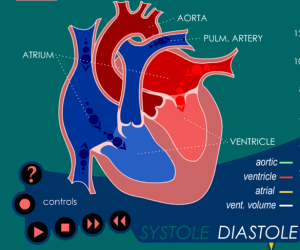 Thanks again to bogstandardcomp from the TES Boards.
This Shockwave app shows the full cycle of the heart beat and can be paused at any point. It includes ‘live’ ECG and blood pressure graphs and some tutorials (though I had difficulty getting them to work). Conveniently, it can also be saved using Firefox or Flashcatcher, to be used on the whiteboard.
Derryclare also posted a great link:
How to Build Tricky Compounds and Make a Cup of Tea
 Have a go at this demo from Presence Multimedia, aimed at A-Level students. It can be saved, is a bit of a challenge and works on the SMART Board.
A simple hunt around their site reveals other educational gems, such as ‘How to Wire a Plug‘, a ‘Personal MOT (good for ATL), and ‘How to Make a Cup of Tea‘.
Yes, you read that correctly – there is a Flash app on the internet to teach you how to make a cup of tea.
How to Wire a Plug
 Simple flash app, allows you to blow up a TV. Can be saved easily.
Thanks to hooper from the TES Boards.




 i-Biology