Category Archives: IBDP Biology
Stephen Fry and the Great American Oil Spill
“This turtle gonna go to rehab, to make its flippers go, go, go…*”
In a recent BBC documentary, Stephen Fry and Mark Carwardine head to the USA to see the damage and recovery from the Deepwater Horizon oilspill:
“Stephen Fry loves Louisiana. Four months after the BP oil spill, dubbed the worst ecological disaster in the history of America, Fry returns to the Deep South together with zoologist Mark Carwardine, to see what the impact has been on the people, the vast wetlands and the species that live there. What they find both surprises and divides the travelling duo.”
From the BBC Website (you might get it in your area)
Two more BBC YouTube clips: Has the oil really gone? and Damage to the deep-sea ecosystem.

BBC Special Report: Oil Spill
The BBC has a good set of resources on the BP Oil Spill, as do the Geographical Association and PBS News Hour Extra. More resources can be found at NewsroomAmerica and Associated Content.
The Deepwater Horizon spill would make a great foundation for an interdisciplinary science unit or Group 4 project, looking at ocean chemistry, waves and dispersal, remote sensing technologies, geological resources, ecology, marine biology and food chains, economics, politics, ethics and much more.
*Amy Winehouse, if you didn’t get it.
It’s Movember! Grow a mo and raise awareness of cancer.
Serendipitously timed, Grade 11 are looking at cell division as some of the male teachers are growing their mo’s for Movember:
“Men sporting Movember moustaches, known as Mo Bros, become walking, talking billboards for the 30 days of November* and through their actions and words raise awareness by prompting private and public conversation around the often ignored issue of men’s health.”
From the MoVember website.
*Actually, we’re doing Nov 10th – Dec 10th, due to the holiday and being a bit slow on the uptake.
So what’s it got to do with Biology?
Well, tumours – such as prostate and testicular cancer in men; breast, uterine, cervical and ovarian cancer in women; and cancer of everything else in everyone else – are simply the result of uncontrolled cell division. Through apoptosis (programmed cell death) or damage (necrosis), cells are destroyed. These need to be replaced with other cells. As our cells are eukaryotic, they need to go through mitosis to ensure that complete copies of all the chromosomes make it into both daughter cells.
As with other cell processes, this is controlled by genes and, importantly, terminated when the cells have grown appropriately. If there is a mutation or problem with a tumour-suppressor gene, such as TP53, the process of cell division is not stopped and the cells grow out of control. This is a tumour. Alternatively, mutations can affect other genes (oncogenes), which encourage further growth.
Click here for a good 11-minute documentary on cancer development, from CancerQuest.
Tumours can start out benign – growths of cells that are not harmful. If these cells become malignant and invade other cells and damage tissues, this is known as cancer. Damage to other cells and tissues leads to illness and can be fatal if not treated early. As tumours grow, they can recruit blood vessels – called angiogenesis. Now you run the risk of metastasis – cells from the tumour breaking off, flowing through the blood and starting a new aggressive tumour in a different part of the body.
Environmental factors can encourage mutations in key cell-cycle-controlling genes. We all know, for example, that smoking can cause lung cancer, UV radiation can lead to skin cancer and the HPV virus can cause cervical cancer.
So why all the fuss about Movember?
Simply, men’s cancers receive less media attention and men tend to be less willing to talk openly about their health problems (unless, of course, they’re trying to get sympathy with a case of man-flu). As guys tend to put off going to the doctor and generally live a lifestyle that is higher-risk for cancer (high fat, high meat, alcohol, smoking, lack of exercise…), tumours can go unnoticed. Men are less likely to survive a cancer diagnosis than their more health-conscious lady friends.
Through cultivating the moustache, we can start conversations about these issues, raise money for education, prevention, research and treatment and promote anti-cancer behaviours:
- Healthy lifestyle choices and awareness of risk
- Self-checking and regular screening for at-risk groups
- Early diagnosis of and treatment for tumours, should they arise (animation)
So get mo-tivated and join the mo-alition of the willing. Take a mo-ment to think about cell division. And mo-an at the men in your life to make healthy choices. Ladies too can get involved – by becoming Mo-Sistas and also raising awareness. The BIS Team are called the BIS Upper Lips!
In the video above, he talks about how genome mapping can lead to giving an indicator of risk to men. Great technology, based on the Human Genome Project (link to 4.4 Genetic Engineering and Biotechnology).
For the class resources on 2.5 Cell Division, click here. Interestingly, and obviously, hair growth itself is a product of cell division. Something to think about as you grow the mo, yo.
Digestion (Core) and Flip Thinking
Digestion – something you only want to go in one direction. But learning about digestion doesn’t have to go one way. As we are trying to reduce the burden of homework and to make any time spent working outside class as effective as possible, we’re going to try Flip Thinking.
Essentially, your homework takes place before class and you complete only the objective 1 command terms (the bits you don’t need me for). With that out of the way and a foundation in the language and diagrams of the topic, we can focus on the more complex items together.
Come to class with the objective 1 command terms completed in the Essential Biology for Digestion (Core). I have highlighted them in yellow. This should take no more than one of your study periods. If it takes longer, stop and let me know how far you got, as well as how effectively you were working.
Come to classes prepared with your laptop and don’t forget the resources we have available.
Here goes:
Further resources:
Essential Biology 6.1 Digestion (Core)
Key question: How many links can you make from Digestion to the others topics we have already studied in IB Biology?
……….o0O0o……….
I cannot take credit for this idea. Check out these resources:
- Flip Thinking from John Burrell (Click4Biology)
- Eric Mazur’s Science education research group
- Flip Thinking from Daniel Pink
- The Homework Myth by Alfie Kohn
If, however, you find that this helps or hinders your progress, be sure to let me know.
Mesolens: see thousands of cells in detail at the same time

Living Water Flea, captured through the Mesolens, by Brad Amos at LMB
Currently on exhibition as part of the Royal Society’s 350th anniversary celebrations, the Mesolens is a giant microscope that can show large field-of-view images of living specimens in incredible detail – thousands of living cells in focus and in detail at the same time. Until now, scientists have had to rely on low-mag light microscopes to obeserve living specimens, or use sections of dead specimens on an electron microscope in order to get high-mag images.

Mesolens vs Hooke
Robert Hooke first drew a human flea in his 1665 book Micrographia. Along with van Leeuwenhoek, Hooke kick-started microbiology, and so it is a fitting tribute that some 345 years later, LMB give us their flea images. You can pan and zoom across a Mesolens image by clicking here
.
Check out this short article from Wired.com explaining how the Mesolens works, and go to the Laboratory of Molecular Biology’s official site for the Mesolens. Can you distinguish between it and a normal light or electron microscope? What advantages will this give to researchers?
The Guardian has a gallery of images from Mesolens, and there is a short video showing image density from the LMB site, as well as a teachers guide to microscopy.
DrosophiLab – Genetics Simulator


- Drosophila buscki
DrosophiLab is a brilliant, free and downloadable piece of software that allows students and teachers to edit fruit flies and carry out crosses. The teacher can use the chromosome editor to set up parent flies of any genotype and there are 20 genes and traits represented, on four chromosomes. This allows for simple monohybrid crosses, sex-linkage, gene linkage and many other combinations – so the problems you set can be differentiated by level. There is also a password-protected teacher setting, to restrict students’ access to results tables and chromosome maps (so they have to work it out for themselves!).
Here are our class resources:
 Protocol sheets: DrosophiLab HL, DrosophiLab SL (pdf)
Fly files in this folder: http://www.box.net/shared/dy326rb01d
Chi-Calc (Chi-squared calculator, .xlsx)
–
How to catch and observe Drosophila:
Catch Your Own Drosophila, from Access Excellence (lots of resources there)
And this is how you tell the sexes apart:
When trying to observe the flies for real, think about the following questions:
– How are you ensuring ethical treatment of the animals?
– How long would it take to determine the phenotypes of the number of flies you have set for your investigations?
– What difficulties do you encounter when observing the flies?
– What are the limitations or sources of error that might affect the reliability of your results?
–
Why are fruit flies so important in science?
Science loves fruit flies, and there was even a fruit fly Nobel awarded in 1995 for studies in embryonic development. This links neatly to the assessment statements regarding the differentiation of cells through expression of different genes.

- Fly!
Fruit fly cells are relatively easily observed, and Drosophila makes for an ideal model organism for Mendelian genetics as it has a short life cycle, reproduces quickly and is easily phenotyped.
There is a biography of fruit flies called Fly: An Experimental Life, by Martin Brookes, and you can find out more about the Drosophila genome at http://www.fruitfly.org/.
–
Image sources:
Drosophila buscki from Journal of Endocrinology
Fruit fly graphic and DrosophiLab banner from DrosophiLab
 i-Biology is for MrT‘s IB Biology and MYP Science students. Find out more on the About pages. Please read and adhere to these guidelines on fair use and consider a donation to charity via my gift list at Biology4Good.
i-Biology.net is NO LONGER being updated for the current IB Biology subject guide (teacher support material here). For other up-to-date free resources, check out Bioknowledgy & BioNinja.
Disclaimer: this is a voluntary project not endorsed by the IB. Teachers must use their judgment and the most up-to-date advice in subject guides and reports before making use of materials here.
E4: Neurotransmitters and Synapses
Review Nerves content from the Core before completing this topic.
Class presentation:
–
Essential Biology E4: Neurotransmitters and Synapses
–

The New Science of Addiction: Genetics and The Brain
From Learn.Genetics
Fantastic resources available from Utah, including the mouse party, neuron and synapse animations and an interactive involving pedigree charts and the role of genetics in addiction.
Spend some time here to really read around the subject of drugs and addiction – you’ll be glad you did and it really helps answer the ‘discuss the causes of addiction’ question!
–
Drugs and The Brain
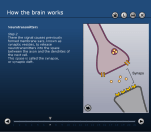
Jellinek is a Dutch drugs education website that has some great, accessible resources for neurobiology of drugs and the brain. Animations are available in multiple languages – why can’t more organisations be as internationally-minded as this?
Be patient though -it needs a lot of bandwidth.
–
Neurotransmitters and Drugs:
Good powerpoint from HHMI
Excellent overview of effects of drugs (Harvard)
Amphetamines, Cocaine, Nicotine as excitatory psychoactives (McGill ‘The Brain’)
Benzodiazepines, Cannabis, Alcohol as inhibitory psychoactives (McGill ‘The Brain’)
–
TOK and Biology: The Nutt-Sack Affair
Leader of advisory panel on drug safety sacked for disagreeing with UK government:
http://www.badscience.net/2009/11/the-nutt-sack-affair-part-493/
Read around the topic, and then answer these questions:

Nutt's Scale of Drugs
- How does this story show the conflict between science and politics?
- What do you feel the respective roles of science and politics should be in the government of a country?
- Suggest reasons why some drugs which are clearly very harmful, such as tobacco and alcohol, are still legal in many countries.
- If you were to form a new country and write a whole new set of drug laws, which would you make illegal or legal and why? Upon which sources of evidence would you rely in order to make your decisions? How would you balance political pressures with scientific evidence?
Find out more about drug laws and the rationale behind them in your own country and the countries you visit or live in.
Remember – regardless of your own opinion on drug laws, if you are caught breaking the law wherever you are, penalties can be very severe.
Creation: Darwin Movie
Due for release this week, Paul Bettany stars as Charles Darwin in the biopic Creation. Based on Randal Keynes’ (Darwin’s great-great grandson) biography Annie’s Box, it promises to be a good movie and has received great reviews from the Toronto International Film Festival and the Guardian.
Here, the makers discuss the challenge of creating an exciting movie based on the life of a scientist, when the ins-and-outs of everyday science work can be pretty mundane. It looks as though they are focusing on the personal aspects of Darwin’s life and relationship with his wife as he works on the manuscript.

Bettany as Darwin
For more listening, the movie is discussed in this week’s Science Weekly Podcast, with discussion from Caspar Melville (with some questionable ideas*). Richard Dawkins also guests, to talk about his new book The Greatest Show on Earth.
Sadly, the movie has not yet only just been picked up for US distribution. I wonder if the title has something to do with that – perhaps Annie’s Box would have been easier to swallow? I also wonder if we’ll get to see it here in Indonesia.
* EDIT: It appears he was ‘conned’ by the AIDS-denialist ‘House of Numbers’ and explains here.
The 11th Hour re-up: Human Impacts on Ecosystems
In 2007, Leonardo DiCaprio released his environmental call-to-arms, The 11th Hour. And it’s very good. It really knocks home the old proverb that we are not inheriting the Earth from our ancestors, but borrowing it from our children.
Update 2009: the whole film is available on GoogleVideo (as all good documentaries should be):
The movie contains contributions from the likes of Stephen Hawking, Nobel-winner Wangari Maathai and David Suzuki. Particularly useful is Gloria Flora‘s sentiment that we all vote, every day – even those who are too young to cast a ballot – by making informed choices about what we consume, spend our money on and throw away.

Watch It!
The first half of the movie is a talking-heads and imagery look at our impacts on the Earth, with plenty of soundbites and starting-points for further discussion. The political middle section describes how economic growth and interests are driving destruction. The final act is a great collection of ideas and hope – a call to arms and a realisation that the environmental movement is growing quickly and strongly. But is it going to be in time to save our species and the thousands that we drive to extinction each year?
–
–
Now here’s Leo’s video message (including the ‘vote’ quote from Gloria Flora):
For some further reading, go to the 11th hour Action website.
–
IB Biology students:
Here is a quick question sheet for the movie, linking some of the topics to the Ecology and Conservation option.
Higher Level students: pay attention to the parts about the role of trees in the environment, in particular through water-uptake. Also, do you understand how mycofiltration (using fungal mycelia) could be used to clean polluted soils?
–
For good measure, here’s Linkin Park’s accompanying music video, What I’ve Done :




 i-Biology