Harvard Stem Cells Breakthrough: Diabetes
This recent news from Harvard is a perfect fit for the IBBio course, connecting lots of what we have learned in the course. Watch this short TED Talk from Prof. Doug Melton on how they are using stem cells to create new insulin-producing beta cells. Then read this article from the Harvard Gazette on the most recent developments in their work.
………..o0O0o………..
Goal: Produce a poster, blog post or short presentation to communicate Melton’s team’s breakthrough, including connections to the IBBio course.
Role: You are science communicators.
Audience: Your peers – high school students and teachers.
Scenario: Stem cells and diabetes are both headline-grabbing stories. As we develop more treatments for diseases using stem cells, the public need to be well informed of the reality of what is happening – and inspired by the future.
Product: Large visual poster, blog (500 words with media) or short presentation (4-5 mins).
……….o0O0o……….
Required information
- Explain that Type 1 diabetes is “an autoimmune metabolic condition in which the body kills off all the pancreatic beta cells that produce the insulin needed for glucose regulation in the body.” [article, paragraph 14]
- Outline the usual treatment needed for type 1 diabetes.
- Outline the properties of stem cells.
- Explain how stem cells differentiate to become differentiated cells.
- Describe the work of Melton’s team to create beta-cell lines derived from stem-cell lines.
- Outline the proposed treatment for type 1 diabetes through implanting the newly-produced beta-cells.
- Discuss any caveats or limitations to the method.
- Discuss any ethical implications for the use of stem cells in this manner.
- Define any new or technical terms used (or discovered in your research) for the audience.
Going Further
- Distinguish between type 1 and type 2 diabetes.
- Evaluate whether this method would be as effective for type 2 diabetes as for type 1, with reasons.
………..o0O0o……….
Teacher Notes
- This could be used to teach part of the homeostasis topic once students know about stem cells, or as a review tool for later in the course.
- Students should refer to the subject guide to check their use of terminology and to regulate the depth of explanation.
………..o0O0o……….
Connecting Type II Diabetes
Here is Doug Melton talking about how we might use hormones to treat Type II diabetes:
Where do new genes come from?
Here’s a neat little TED-Ed Lesson by science writer Carl Zimmer (follow his blog, The Loom, on evolution).
How NOT to be ignorant about the World: Hans & Ola Rosling
Another great Hans Rosling TED Talk, this time with his son, Ola. Here Dealing with misconceptions, bias, ignorance of global issues and a little formative assessment, they discuss how we can be better informed about the world, with a fact-based world view… and how we could (eventually) perform better than chimps on a global issues quiz.
This would make a great provocation for a TOK unit, or one in Geography or a Global Issues group. In our field of international education it might be useful for parent and teacher training, considering why we need to educate for global understanding, not just for disciplinary knowledge. Through a fact-based world view, we can develop truly internationally-minded, globally-engaged young inquirers, who recognise their biases and know how to learn more about the truths of the world we live in now and into the future.
I love the suggestion they have of a “global knowledge certificate” for agencies, schools and employers that is based on candidates taking a test on the fact-based world view. You read about the ignorance project here on CNN, or find more classroom resources (including a world-view card game) on Gapminder’s education page. The Guardian also has a selection of global development quizzes, which you can take for fun or in class.
IBBio: Investigation Cycle
This is an attempt to capture the internal assessment descriptors (for the new guide) in a format similar to the MYP’s Experimental Cycle and Design Cycle diagrams. Click here to download a higher-quality .svg file for poster printing.


Beautiful and sad GIFs that show what’s happening to the ocean
The gif images illustrate some of the damage we’ve done to the oceans. Slow clap, humans.
Quick Review: Tony Butt’s Guide to Sustainable Surfing
A quick review of a quick read: if you’re into surfing or the outdoors, this is worth your time (and is very cheap).

 Dr. Tony Butt
This quick read (74 pages,£0.87 on Kindle) is worth an hour or two of your time, especially if you’re into surfing or outdoor pursuits and are concerned about the environment. Tony Butt is a big-wave surfer and has a PhD in Physical Oceanography; his educational columns on Surf Science in Surfer’s Path magazine (and his book on the same) are excellent primers on waves, surfing and the environment.
In this text, Dr. Butt sets out to describe how we impact the environment as surfers and how we can make choices that can mitigate these impacts. He makes connections between the issues of Energy, Travel and Stuff related to surfing, highlighting the unsustainable nature of the jet-setting, product-hungry, WCT-inspired modern surfer. Of particular interest are issues of embedded energy and product life cycles, which you may recognise from Annie Leonard’s Story of Stuff series…
View original post 375 more words
Ecosia – the search engine that helps plant trees
Thanks to David Faure for pointing this out.
Have a go at Ecosia, a search engine that donates 80% of its profits to reforestation projects in Brazil. Find out more about how this work on this page, and give it a go!
Try Ecosia now. You can add it as a Chrome extension, too.
Surviving the Peace: Mines Advisory Group
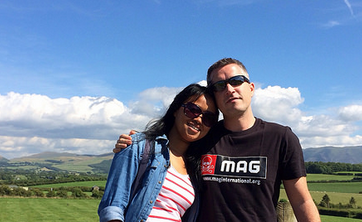
We support the Mines Advisory Group
As global tensions appear to heighten, it is is easy to get sucked into side-taking on facebook, twitter or other media, yet this is rarely helpful. There is nothing to be gained by sharing yet another horrific photo or vitriolic screed to elicit comments from your followers. As compassionate, educated global citizens we should look instead for ways to support those who are making a positive difference.
Here’s my example.
Mines Advisory Group (MAG) started in a caravan in my hometown of Cockermouth in the UK, and has blossomed over the last two decades into a major worldwide organisation dedicated to making war-torn areas safer by surveying and removing landmines and unexploded ordnance. They were co-recipients of the Nobel Peace Prize in 1997 for their work on the International Campaign to Ban Landmines and are well-deserving of all the funds we can raise.
Check out their 23-minute film, “Surviving the Peace“, which focuses on Laos and outlines how they work and the lasting impacts their work has on the lives of survivors of war. If you want to support them, please make a donation via my Biology4Good page for MAG, on JustGiving.
And here is a more recent video on “Surviving the Peace: Angola“:
……….o0O0o………..
A challenge to i-Biology users
Use your online influence to share links to organisations that focus on protecting our environment or alleviating suffering. I have eight examples on my Biology4Good fundraising page, and you might want to do something similar. Tell the world why you care about their cause and how they’re making a difference. Maybe even work it into a CAS project.
Teaching our Sons not to rape: SexEd & #YesAllWomen
This is re-blogged from my personal reflections site, but it is an important current issue and might be of interest.
This is a brief reflection on a work in progress, but health education in school is very important to me. It is a brief reflection on a project to update and refine a Sex Ed sequence, bringing in a stronger element of values education, sexuality and attitudes. It aims to move away from the traditional ‘plumbing and don’t get pregnant or raped’ approach to a more powerful and relevant ‘plumbing, make good decisions and be a good person’ approach.
Background
 From @feministabulous on Twitter.
Towards the end of the year we had the opportunity to review and teach a G9 Sex Ed class, standing separate from the regular MYP PHE class and with a different staffing allocation. It comes at a time when the school is working out how to re-distribute health topics into PE, to make PHE, yet retain the balance of content work and physical activity. Sexuality education is…
View original post 1,155 more words




 i-Biology