DNA Replication (Core & AHL)
Class Presentation:
–
Essential Biology 3.4 DNA Replication (SL Students)
Essential Biology 3.4 & 7.2 DNA Replication (HL Students)
–
DNA Replication animations:
St. Olaf’s nice and clear animation.
Another clear one from Wiley.
Nicely illustrated one from Harvard.
John Kyrk’s complicated molecular animation.
The Meselsohn Stahl experiment from Sumanas.
More animations from North Harris College and from LearnersTV.
–
Revision materials:
Click4Biology pages: Core & HL
–
Here is the top-rated video on the subject on YouTube:
E5 The Human Brain (HL)
Almost there, HL’s!
Check out the excellent resources from the NewScientist: The Human Brain
PBS has a great site called The Secret Life of the Brain (with 3D animation), and there’s Slate’s special issue on The Brain.
Class presentation:
–
Essential Biology E5: The Human Brain
–
Regions of the brain:
PBS: 3D brain animation
–
Evidence for functions of brain structures
Reader on brain technologies, from Nature
How does fMRI work? Video from 60 minutes:
Investigating Broca’s area:
Ferrier’s animal experiments reader (from 1881)
–
Sympathetic vs Parasympathetic control
Simple animation from GFisk
Heart rate control animation, from McGraw Hill
Put some ACh into it, music video:
–
Pupillary Reflex
Pathways of the pupil reflex animation from Utah Medicine
How to test the pupil response:
–
Perception of Pain
Pain pathways animation, from Bay Area Pain Medical
Effect of endorphins on pain, from Wadsworth Psychology
–
Do fish feel pain? Reader from Science Daily
DNA Structure (Core and AHL)
Start with a decent tour of the basics, from Learn.Genetics.
Class presentation is here (click shadowed images for animations and movies):
Essential Biology: 3.3 (SL Only) DNA Structure
Essential Biology: 3.3 & 7.1 (HL) DNA Structure
Here’s a decent video from BBC AS Guru with David Suzuki:
–
And here’s a very stylized video of DNA structure from Hybrid Medical Animation. See if you can narrate it:
–
The story of the discovery of the double-helix structure is a good example international collaboration and competition, and led to the Nobel prize for Crick, Watson and Wilson (who we never hear about). You’ve got to feel for Rosalind Franklin – her work was key in their discovery and she wasn’t cited for it until after her death.
Here’s a great video, though the presenter sound like he has a mouth full of marbles:
LifeSaver Bottle: Michael Pritchard at TED
 TED2010 is on right now in California, so it’s a good opportunity to look at some of their best talks of the past year. This one is short and inspirational – how to meet the UN’s Millenium Development Goal to “Halve, by 2015, the proportion of the population without access to safe drinking water and sanitation“ – for just $8bn!
Michael Pritchard’s LifeSaver bottle is a solution to clean water needs. For just $150, it can filter even the dirtiest water, in remote areas, or following disasters such as the Haiti quakes. Spurred on by the problems following the Asian tsunami and Hurricane Katrina, see Pritchard demonstrate the technology at TED 2009:
There’s a nice little link there to cell theory and magnification, also.
This year, who is going to be worth watching? Check out the list of presenters here.
Robin Hood Tax

OK, so it’s not science – but Economics, Health and Ecology work pretty well together, so here goes:
This is a recent clip from the UK, made by Richard Curtis (Four Weddings and a Funeral, The Boat That Rocked), outlining the potential benefits of a so-called Robin Hood Tax. The idea proposes that just 0.05% of profits made from city banking deals are taken and used to help the poor and support the economy. Watch Bill Nighy acting the banker as he answers some questions from an interviewer on the benefits of the tax:
E3 Innate and Learned Behaviour
Class Presentation:
Essential Biology E3: Innate and Learned Behaviour
–
Animations and Tutorials:
Collection from The Animated Brain
Classical Conditioning from NobelPrize.org
Indiana Univerity Song Learning in Cowbirds: Social effect on birdsong:
–
TOK:
To what extent is human behaviour innate in nature?
Watch this video from the California Academy of Sciences’ Science in Action series: Facial Expressions
What is the effect of the observer on human behaviour when they know they are being observed?
Why do the blind olympians provide a good sample population for the study?
What conclusions could be drawn from the investigation? Why?
California Academy of Sciences Channel

Here’s a good YouTube channel from California Academy of Sciences: Science in Action with over 100 videos covering a diverse range of topics. To tie into GRade 12’s Neurobiology and Behaviour unit, here’s a clip on intelligent crows!
There are also loads of interviews, science news stories and general interestingness. Check it out!
E2 Perception of Stimuli
Class presentation:
–
Essential Biology: E2 Perception of Stimuli
–

- Hermann Grid Illusion
Sight:
Collection of animations from North Harris College
Eye structure tutorial from Sumanas
Simple how-the-eye-works from BiologyMad
The Sense of Sight from Wisconsin Online
How many megapixels is the human eye? from Brainiac.
–
Hearing:
How the Ear Works, from NobelPrize.org
The Sense of Hearing from Wisconsin Online
Neat Ear Tutorial from University of Alaska Fairbanks
McGraw Hill Effect of Sound Waves on Cochlear Structures
Test your hearing range (carefully) from the University of New South Wales
–

- Mantis Shrimp: Awesome Vision
Interesting reading:
The peer-iodic table of illusions, from NewScientist.com
The Mantis Shrimp’s amazing visual capabilities, from NotExactlyRocketScience
–
The eye is not irreducably complex – it is the product of natural selection
Evolution of vertebrate eyes from Pharyngula
Owl monkey example of eye evolution, from NotExactlyRocketScience
Video, The Evolution of the Eye, from PBS:
E1 Stimulus and Response
Class Presentation:
Essential Biology: E1 Stimulus and Response
–
For Reflex Arcs (including the pain reflex):
Start with this tutorial from Sumanas
And this animation from the University of Minnesota
Lots more CNS animations from North Harris College
–
Some good readers from Not Exactly Rocket Science for the effect of natural selection on response to stimulus:
E4: Neurotransmitters and Synapses
Review Nerves content from the Core before completing this topic.
Class presentation:
–
Essential Biology E4: Neurotransmitters and Synapses
–

The New Science of Addiction: Genetics and The Brain
From Learn.Genetics
Fantastic resources available from Utah, including the mouse party, neuron and synapse animations and an interactive involving pedigree charts and the role of genetics in addiction.
Spend some time here to really read around the subject of drugs and addiction – you’ll be glad you did and it really helps answer the ‘discuss the causes of addiction’ question!
–
Drugs and The Brain
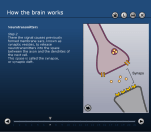
Jellinek is a Dutch drugs education website that has some great, accessible resources for neurobiology of drugs and the brain. Animations are available in multiple languages – why can’t more organisations be as internationally-minded as this?
Be patient though -it needs a lot of bandwidth.
–
Neurotransmitters and Drugs:
Good powerpoint from HHMI
Excellent overview of effects of drugs (Harvard)
Amphetamines, Cocaine, Nicotine as excitatory psychoactives (McGill ‘The Brain’)
Benzodiazepines, Cannabis, Alcohol as inhibitory psychoactives (McGill ‘The Brain’)
–
TOK and Biology: The Nutt-Sack Affair
Leader of advisory panel on drug safety sacked for disagreeing with UK government:
http://www.badscience.net/2009/11/the-nutt-sack-affair-part-493/
Read around the topic, and then answer these questions:

Nutt's Scale of Drugs
- How does this story show the conflict between science and politics?
- What do you feel the respective roles of science and politics should be in the government of a country?
- Suggest reasons why some drugs which are clearly very harmful, such as tobacco and alcohol, are still legal in many countries.
- If you were to form a new country and write a whole new set of drug laws, which would you make illegal or legal and why? Upon which sources of evidence would you rely in order to make your decisions? How would you balance political pressures with scientific evidence?
Find out more about drug laws and the rationale behind them in your own country and the countries you visit or live in.
Remember – regardless of your own opinion on drug laws, if you are caught breaking the law wherever you are, penalties can be very severe.




 i-Biology