Category Archives: Areas of Interaction
Sex, Lies and Cigarettes
I came across this video via Steve Harton’s Hartonline Bio website and clicked on it because of the Indonesia connection. I’m glad I did, though it made me quite angry.

Aldi
Having spent most of the last eight years in Indonesia, I have long been concerned about the ubiquity of the tobacco industry and the all-pervasive nature of the advertising. Everything – literally everything – is sponsored by tobacco. From TV and movies to sports (!), some schools (!!) and music concerts. There is no escaping the message that smoking is cool, good for you and leads to an exciting life.
So how did it get this way when the developed world is shunning the dangers of smoking?
This 40-minute documentary by Vanguard puts it all in context. From the viral video sensation of Aldi the smoking baby, to the simple, ruthless economics of exploiting a developing country and targeting their children as an emerging market, the film-makers lay it out clearly and passionately. It focuses too on the work of an anti-smoking action group who face the huge challenge of taking on big tobacco in a country where so much depends on it – it’s a major cash crop and source of income.
This video is a YouTube upload, but there are clips and resources on the official Vanguard page.
I loved the bit where the Miss Indonesia contestants help the film-maker crash the World Tobacco Asia conference!
Some questions and thoughts to consider when watching the movie:
- Near the end of the movie, there is a quote from Warren Buffett: “I’ll tell you why I like the cigarette business. It costs a penny to make. Sell it for a dollar. It’s addictive. And there’s fantastic brand loyalty.” Although he has changed his stance on tobacco, it neatly illustrates the bottom-line ethos of business.
- As a publicly-owned company, your main responsibility is to the shareholder – you must maximise profits. Discuss the ethics of targeting children in emerging economies as a market.
- Accepted science states that tobacco is addictive and harmful to human health. Why then has this not been recognised by the Indonesian government?

For more good documentaries, have a look at Vanguard's website.
Inside Fukushima
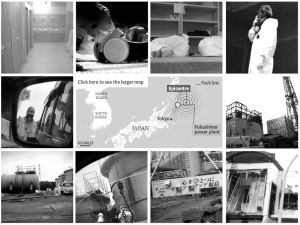
The Guardian has a nice interactive gallery this week of some images taken inside the Fukushima clean-up operation. In the months since the Tōhoku earthquake, there have been published a wealth of very useful educational resources regarding nuclear power, radiation, earthquakes and tsunamis. Sadly too the internet has been inundated with rubbish. When we come to our Atomic Energy unit of inquiry in Grade 10, we will look at some of these and try to evaluate their usefulness.
For now, enjoy the pictures. If you want to learn more, the Guardian was pretty good with their coverage and their links are well worth following.
The end of the shuttle
Here’s a neat little clip from Nature Video, with natty soundtrack, highlighting 135 space missions of the NASA shuttle programme. If you have access to BBC iPlayer, you can see a very insightful documentary on the final shuttle flight here. Visit NASA’s shuttle resources to find out more about the shuttle programme, its successes and dramatic episodes, as well as what is next for NASA.
Stephen Fry and the Great American Oil Spill
“This turtle gonna go to rehab, to make its flippers go, go, go…*”
In a recent BBC documentary, Stephen Fry and Mark Carwardine head to the USA to see the damage and recovery from the Deepwater Horizon oilspill:
“Stephen Fry loves Louisiana. Four months after the BP oil spill, dubbed the worst ecological disaster in the history of America, Fry returns to the Deep South together with zoologist Mark Carwardine, to see what the impact has been on the people, the vast wetlands and the species that live there. What they find both surprises and divides the travelling duo.”
From the BBC Website (you might get it in your area)
Two more BBC YouTube clips: Has the oil really gone? and Damage to the deep-sea ecosystem.

BBC Special Report: Oil Spill
The BBC has a good set of resources on the BP Oil Spill, as do the Geographical Association and PBS News Hour Extra. More resources can be found at NewsroomAmerica and Associated Content.
The Deepwater Horizon spill would make a great foundation for an interdisciplinary science unit or Group 4 project, looking at ocean chemistry, waves and dispersal, remote sensing technologies, geological resources, ecology, marine biology and food chains, economics, politics, ethics and much more.
*Amy Winehouse, if you didn’t get it.
It’s Movember! Grow a mo and raise awareness of cancer.
Serendipitously timed, Grade 11 are looking at cell division as some of the male teachers are growing their mo’s for Movember:
“Men sporting Movember moustaches, known as Mo Bros, become walking, talking billboards for the 30 days of November* and through their actions and words raise awareness by prompting private and public conversation around the often ignored issue of men’s health.”
From the MoVember website.
*Actually, we’re doing Nov 10th – Dec 10th, due to the holiday and being a bit slow on the uptake.
So what’s it got to do with Biology?
Well, tumours – such as prostate and testicular cancer in men; breast, uterine, cervical and ovarian cancer in women; and cancer of everything else in everyone else – are simply the result of uncontrolled cell division. Through apoptosis (programmed cell death) or damage (necrosis), cells are destroyed. These need to be replaced with other cells. As our cells are eukaryotic, they need to go through mitosis to ensure that complete copies of all the chromosomes make it into both daughter cells.
As with other cell processes, this is controlled by genes and, importantly, terminated when the cells have grown appropriately. If there is a mutation or problem with a tumour-suppressor gene, such as TP53, the process of cell division is not stopped and the cells grow out of control. This is a tumour. Alternatively, mutations can affect other genes (oncogenes), which encourage further growth.
Click here for a good 11-minute documentary on cancer development, from CancerQuest.
Tumours can start out benign – growths of cells that are not harmful. If these cells become malignant and invade other cells and damage tissues, this is known as cancer. Damage to other cells and tissues leads to illness and can be fatal if not treated early. As tumours grow, they can recruit blood vessels – called angiogenesis. Now you run the risk of metastasis – cells from the tumour breaking off, flowing through the blood and starting a new aggressive tumour in a different part of the body.
Environmental factors can encourage mutations in key cell-cycle-controlling genes. We all know, for example, that smoking can cause lung cancer, UV radiation can lead to skin cancer and the HPV virus can cause cervical cancer.
So why all the fuss about Movember?
Simply, men’s cancers receive less media attention and men tend to be less willing to talk openly about their health problems (unless, of course, they’re trying to get sympathy with a case of man-flu). As guys tend to put off going to the doctor and generally live a lifestyle that is higher-risk for cancer (high fat, high meat, alcohol, smoking, lack of exercise…), tumours can go unnoticed. Men are less likely to survive a cancer diagnosis than their more health-conscious lady friends.
Through cultivating the moustache, we can start conversations about these issues, raise money for education, prevention, research and treatment and promote anti-cancer behaviours:
- Healthy lifestyle choices and awareness of risk
- Self-checking and regular screening for at-risk groups
- Early diagnosis of and treatment for tumours, should they arise (animation)
So get mo-tivated and join the mo-alition of the willing. Take a mo-ment to think about cell division. And mo-an at the men in your life to make healthy choices. Ladies too can get involved – by becoming Mo-Sistas and also raising awareness. The BIS Team are called the BIS Upper Lips!
In the video above, he talks about how genome mapping can lead to giving an indicator of risk to men. Great technology, based on the Human Genome Project (link to 4.4 Genetic Engineering and Biotechnology).
For the class resources on 2.5 Cell Division, click here. Interestingly, and obviously, hair growth itself is a product of cell division. Something to think about as you grow the mo, yo.
The 11th Hour re-up: Human Impacts on Ecosystems
In 2007, Leonardo DiCaprio released his environmental call-to-arms, The 11th Hour. And it’s very good. It really knocks home the old proverb that we are not inheriting the Earth from our ancestors, but borrowing it from our children.
Update 2009: the whole film is available on GoogleVideo (as all good documentaries should be):
The movie contains contributions from the likes of Stephen Hawking, Nobel-winner Wangari Maathai and David Suzuki. Particularly useful is Gloria Flora‘s sentiment that we all vote, every day – even those who are too young to cast a ballot – by making informed choices about what we consume, spend our money on and throw away.

Watch It!
The first half of the movie is a talking-heads and imagery look at our impacts on the Earth, with plenty of soundbites and starting-points for further discussion. The political middle section describes how economic growth and interests are driving destruction. The final act is a great collection of ideas and hope – a call to arms and a realisation that the environmental movement is growing quickly and strongly. But is it going to be in time to save our species and the thousands that we drive to extinction each year?
–
–
Now here’s Leo’s video message (including the ‘vote’ quote from Gloria Flora):
For some further reading, go to the 11th hour Action website.
–
IB Biology students:
Here is a quick question sheet for the movie, linking some of the topics to the Ecology and Conservation option.
Higher Level students: pay attention to the parts about the role of trees in the environment, in particular through water-uptake. Also, do you understand how mycofiltration (using fungal mycelia) could be used to clean polluted soils?
–
For good measure, here’s Linkin Park’s accompanying music video, What I’ve Done :
Classification
Grade 11 are starting out the course with a short “Nature of Biology” unit, made up of Statistical Analysis (and some practice with data), Classification, Evolution and a little introduction to ToK in Biology. Grade 12 are also looking at Classification at the moment, as part of the Ecology, Evolution and Conservation unit.
Here is the class presentation:
Download as pdf here: 5.5 Classification
–
Work through this Essential Biology 5.5 Classification as you go through the presentation.
There are some activities you can download here:

- Shark ID Guide at Queensland
Invertebrate phyla cards and dichotomous key
Paired groups key-making activity: Spiders vs Beetles
–
And here are the Click4Biology notes
There is also a great Environmental Science course online here: The Habitable Planet
–
Have fun!
NOAA Environmental Visualisation Library

Education Resources, Animations, Videos and Satellite Images
Awesome. NOAA (National Oceanographic and Atmospheric Administration) has revamped its Environmental visualisation libray – bringing new educational materials, visualisations, animations and resources to educators and the public. See the images of the 2008 hurricane season, animations of the ocean damage caused by humans or check out their library of satellite images.
They also have a YouTube channel where you can view and download some of their video resources. In relation to our upcoming Earth Day theme of “Reefs and Oceans“, here’s a clip about the effects of coral bleaching:
————————————————————————————————————————————————–

Check out the NOAA image galleries too...
How to regrow a rainforest – Willie Smits on TED Talks

Willie and the orangs
My Grade 12 class have looked at this story before, and now we can hear about it from Willie Smitts, a primatologist and conservationist who has led a huge project to replant and revive a section on rainforest in Borneo. They have taken over 8,000 hectares of scorched and cleared land and are returning it to a habitat worthy of orang-utans and many more endangered species.
–
Smits was featured in TED2009 and here he is with his story of how they regrew the rainforest.




 i-Biology