Encylopedia of Life
 A huge and ambitious project to create an online species database. Here is their ‘about us’ blurb:
The Encyclopedia of Life (EOL) is an ambitious, even audacious project to organize and make available via the Internet virtually all information about life present on Earth. At its heart lies a series of Web sites—one for each of the approximately 1.8 million known species—that provide the entry points to this vast array of knowledge. The entry-point for each site is a species page suitable for the general public, but with several linked pages aimed at more specialized users. The sites sparkle with text and images that are enticing to everyone, as well as providing deep links to specific data.
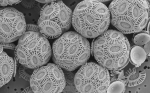
Try the example page for Cafetaria roenbergensis here.
TED – 50 million views young (and the best graphs EVER)
TED (Technology, Education, Design) has racked up 50 million views since 2006 and is proof that people can use the internet for more than just celebrity gossip and the dodgy sites. They now have a highlight reel of their top ten talks, including the $40 SMART Board, some oceany greatness and lessons learned while having a stroke. Ken Robinson’s talk is up there (are schools killing creativity?), and one of the coolest bits of statistics you’ll ever see from Hans Rosling:
After watching that, you should absolutely must head straight on over to gapminder.org and be dazzled.
You can even access the gapminder graph and manipulate both axes. Awesome.
Synthetic Biology – the man-made future?
Where’s the money in Biology? Probably where the future lies – genetics and synthetic biology.
As we learn more about genomes and the way different organisms (including pathogens) work, we can move towards creating targeted responses and DNA-level manipulation. Synthetic biologists take DNA and try to re-work it into a solution to a problem – by creating synthetic DNA, they hope to achieve control over the functions of the organism. They hope to generate alternative sources of fuel, targeted treatments and vaccines and many more applications.
Click on the image to the right to download a useful poster from SEED magazine.
BioBricks (company link) are a leading example of synthetic biology in action. Think of them like lego bricks or parts of standard computer code – you can take them and (theoretically) fit them into any genome. This is one of the wonders of DNA – base-pairings and the universality of the genetic code allow these researchers endless opportunities for tinkering and advancing science. Some BioBricks are ‘parts’, some are ‘devices’ and others are ‘systems’ – sections of code that increase in complexity and functionality.
There is an exciting world of information out there about this topic, and it’s well worth looking at if you think your future lies in biotechnology. It’s a discipline that pulls together Biology, Physics, Chemistry, Maths, Engineering and Programming, and the ways in are various. If you want to find out more about a career in synthetic biology, MIT are world-leaders in the field.
For a quick explanation of how synthetic biology works (and an interesting hardware/software analogy) watch the video from ScientificAmerican below:
You might also want to read ‘Prey’ by Michael Crichton for a bit of light holiday scare-mongering. Imagine ‘The Andromeda Strain‘ with nanoparticles.
And while we’re on the subject of Scientific American, you may as well check out their video channel on YouTube. It’s much like the NewScientist one.
Plant Structure and Growth
For the Plant Science unit in IB Biology.
More links and the original file to be added soon.
SEED Magazine – Science and TOK, all wrapped up
SEED Magazine is another great resource out there for High-School and above.
It’s a bit like NewScientist, though with more appeal to the i-generation, with a good format and some really thought-provoking articles.
Good features:
– the Daily Zeitgeist (look it up) wraps up 5 stories daily, and can be subscribed to via RSS (see the right-hand column on this blog to see what I mean).
– Cribsheets: decent in-a-nutshell posters on topics from photosynthesis to string theory. Well worth printing and sticking in the space where that Westlife poster used to go.
NewScientist reports on Prius with noise-machine.
I’m not sure if my sarcasm gene is on overdrive today or what, but this seems to me like biggest bit of non-news that NewScientist’s video channel has produced.
“Fake engine noise makes electric cars safer”
The main point seems to be to protect blind people and the terminally stupid (or i-Pod wearing) from being hit by quiet hybrid cars as they cross the street.
See how Mad Mike would solve the problem after the jump:
Playing the Building: David Byrne’s sound sculpture
This is pretty cool – turn an old building into a giant musical instrument:
Here’s the original link to the video at BoingBoingTV:
http://tv.boingboing.net/2008/06/10/david-byrne-and-xeni.html




 i-Biology