Category Archives: Chemistry
Fun With Acetate
Thanks to Ben at Badscience for the link.
Here’s an idea for an exothermic reactions demonstration (original post from b3ta.com)
Footprints Science – loads of simple, clear interactives
 This site has a good collection of animations and interactives aimed at KS3/GCSE levels. It is divided into Bio, Chem and Phys and has a section on coursework. Well worth spending time having a look there, especially as most of them can be saved easily.
Special prize for anyone who can work out what the Taj Mahal is doing in the banner for a Science website.
How to Build Tricky Compounds and Make a Cup of Tea
 Have a go at this demo from Presence Multimedia, aimed at A-Level students. It can be saved, is a bit of a challenge and works on the SMART Board.
A simple hunt around their site reveals other educational gems, such as ‘How to Wire a Plug‘, a ‘Personal MOT (good for ATL), and ‘How to Make a Cup of Tea‘.
Yes, you read that correctly – there is a Flash app on the internet to teach you how to make a cup of tea.
A new year, a new beginning (of all life on Earth)
 Two short clips of Miller-Urey’s experiments demonstrating the formation of amino acids from water, ammonia and hydrogen (with a little help from lightning). The evidence produced by this experiment supported the hypothesis of chemical evolution – the formation of organic compounds from inorganic molecules.
Thanks to Hilary Rimbi from the IB’s OCC for posting this link. 
A quick Google search turned up this short clip of Stanley Miller describing the experimental set-up.
If you click here, you can also try a simulation of the experiment (can be saved with Flashcatcher). This little Flash was produced by the University of California at San Diego’s TV channel. I haven’t had time to search through their site, but there may be more useful nuggets of Science gold there.
It’s the Holidays
No posts for a while – taking the family back to the UK for baby’s first Christmas.
Here are the Eepybirders celebrating Christmas – Diet Coke and Mentos style.
Enjoy, have a good holiday and see you in the New Year.
Steve.
“You might as well face it – it’s resistant to base”
Very funny parody of Addicted to Love. Thanks to madcat for posting it to the TES Boards. It’s produced by scottkj on YouTube.
Full lyrics after the jump:
The New Scientists playing with food
Two experiments from the New Scientist book ‘How to Fossilise Your Hamster‘.
In the first, we find out how to extract iron from breakfast cereal (perhaps we could use it to make a hammer to deal with the presenter):
In the second, we see how to extract casein (as an example of a polymer) from milk, using just vinegar and a stove. They keep saying ‘plastic’ here, but I’m pretty sure it’s not a plastic. Plastics are polymers, but casein is a protein (though still a polymer). Correct me if I’m wrong. Either way, it might be a good trick to introduce the proteins topics in DP Bio.
John Kyrk – Cell Biology Animation
 This guy has spent a lot of time and effort on these animations, and they are brilliant.
]
Visit his main page at www.johnkyrk.com and you’ll find all you need for IB Bio HL Cells and Chemistry of Life.
ACD Labs: Chemsketch – free modelling software
 It’s not really a video, but you can build molecular models and make them move around on the screen, so it just about qualifies. It takes a wee while to get used to, but is worth the effort.
Demo videos here. Manuals here.
DP Bio teachers can use it to satisfy the modeling software stipulation of the 4/PSOW form. Enjoy!
EDIT – there is a shareware ($24.95) gif to flv encoder available here. I haven’t found any free software that can convert gif animations to flv files, so if anyone can help out, please let us know.
I have put a simple Chemsketch tutorial on making and animating glycine (word 2007 doc and SMART Board notebook file) in the downloads box on the right of this blog.
EDIT AGAIN:
The joys of Chemsketch are almost limitless. Here is proof: 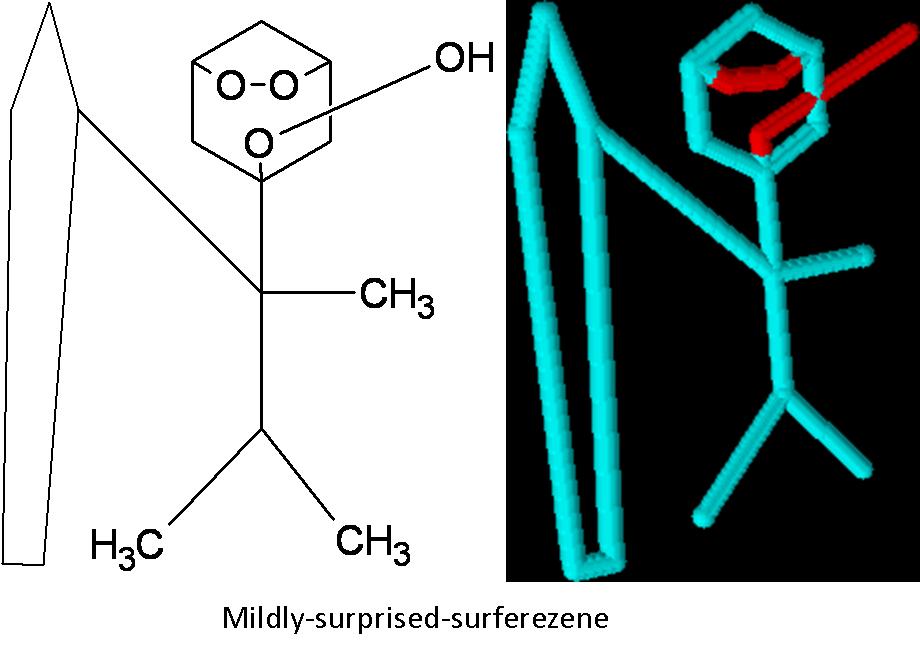
Exploscience.com – Bangs on a Budget

Click on the link above to see a great collection of Chemistry demos on a budget. Must have been a lot of work, and the authors deserve the $24.95 for their ‘Bangs, Flashes and Explosions’ manual. I’ll be downloading one for Christmas…
Videos are wmv and quicktime, but right-clicks have been disabled – it looks like a DVD is on sale (maybe this comes with the lab manual? Not sure).
Thanks again to bogstandardcomp from the TES Boards for the link.




 i-Biology