Category Archives: Channels & Publishers
Mice cloned from frozen bodies
 So cloning is nothing new, but for the first time we see healthy lab mice cloned from the cells of dead mice – some articles are calling this a ‘resurrection’, although it is nothing of the sort.
It is, however, a big step forward for genetic reserach – lifting the possibility of cloning long-extinct species out of the realms of pure science fiction and into the ‘almost there’ zone. A team of Japanese researchers from Kobe, Japan, used a modified method to clone these mice from tissues that had been frozen for up to 16 years.
Here’s a clip from Japanese news, with a really clear section showing what looks like the insertion of the nucleus into an egg:
For a useful reader, here is the NewScientist article. Here’s another one from the Guardian.
As ever, one of the best reading sources is the Not Exactly Rocket Science blog, where Ed Yong tackles the research paper directly in his article and makes it easy to understand. Check it out here.
Learning idea: ‘dub’ the Japanese clip into your own language, using the information from the articles above.
How did they achieve it? How does it differ from normal cloning? What surprising results did they encounter?
Try to get your story to complement the images in the video clip.
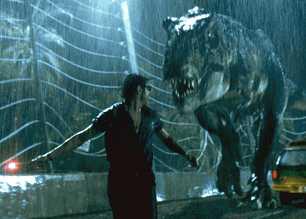
I can just see Jeff Goldblum‘s gurning face as runs for his life from a cloned dodo…
Jared Diamond: Guns, Germs and Steel
 Diamond came up on TED Talks this week, and he is a great example of Edge’s idea of the Third Culture – taking the sciences and humanities and putting them together to get to the roots of how the world works.
Jared Diamond specialises in how societies collapse and how cultures have become different, by not only focusing on the social and political but also the environmental and evolutionary. One of his books, Guns Germs and Steel, tells the story of how human history took different paths and is one of my top science-related reads.
National Geographic ran a 3-part series on the book, and here it is on GoogleVideo:
Here are Part 1, Part 2, Part 3
In this talk, the comb-over king discusses how societies collapse:
Jared Diamond’s Edge profile
American Scientist interview
Amazon search results for his books.
Chemical Party – LOLs from the Marie Curie Actions
(mature content) In keeping with the recent trend of serious scientists getting silly, here is the Chemical Party video from the European Commisions Research Marie Curie Actions:
Love water and potassium.
Big Bang Rap – The LHC team explain
This is just great -a rap produced by the scientists at the Large Hadron Collider to explain what they do, what dark matter is and how the Big Bang happened. They switched it on today, and the world didn’t end, which is nice. Read more about it here.
Goblin Shark: oo-er
What’s the hungriest shark in the sea?
This one, ‘cos it keeps gobblin’ and gobblin’ and gobblin’…
Originally posted by the excellent Zooillogix blog. Go on over and have a look.
Wind Turbines Make Bats’ Lungs Explode
I thought this was a hoax when I first read it, but it’s serious – and even though I’m all up for renewable energy sources (including wind-power), this is a little worrying.
Many people know that if you’ve been SCUBA diving or snorkelling deep down, you need to exhale as you surface – and not rise too quickly. This is because a rapid decrease in pressure as you surface can cause bubbles of nitrogen to form in the blood, leading to potentially fatal bends.
Well it seems a similar pressure-related phenomenon has been causing bats to drop dead near wind turbines – although instead of nitrogen bubbles forming, their lungs have been violently haemmoraging. Simply put, the high air speed around the tips of the blades cause a dramatic drop in air pressure. Bats can’t detect changes in air pressure with their echolocation, so fly through this areas. When the air pressure drops, their lungs expand and then pop.
For a great article about this, head on over to Ed Yong’s award-winning Not Exactly Rocket Science.
Here’s NewScientist’s video on the same subject:
One simple solution posted on Ed’s comments section suggest that a high-frequency noise might keep the bats at a safe distance. That would have the added benefit of keeping away the teenagers!
Here’s the link to an old post about an exploding wind turbine.
Einstein the Parrot: Talking and Squawking
This is five minutes of entertainment from TED Talks:
 Einstein the Parrot is an African Grey, a species known for their intelligence and ability to build a large vocabulary. As research into animal intelligence develops, it raises questions on how we measure intelligence – are we really that much more ‘intelligent’ than our philosophising cousins?
How do we discern the difference between a well-trained animal putting on a show and one which is making considered decisions on its behaviour?
For an interesting overview of animal cognition, check out this wikipedia article and do some further reading around the sources listed in the references section.
The Periodic Table of Videos
 Thanks to Danny from the Whiteboard Blog for posting this.
The Chemistry department at the University of Nottingham evidently got a new video camera last Christmas and have been making videos about all of the elements on the periodic table. This impressive and mammoth project is a collection of videos about each of the elements in the periodic table – and it rocks. The best way to find out more is to go on over and have a look…
Helpfully for those who’ve been blocked from YouTube (who host all the videos), they’ve posted a link to watch themon another server.
Here’s one of their top recommended videos, Phosphorous:
This is now one of my favourite YouTube channels.
The 11th Hour – Leo Dicaprio gets his Gore on…
Following on from Al Gore’s Inconvenient Truth, Leonardo DiCaprio last year released his environmental call-to-arms, The 11h Hour. And it’s very good. It really knocks home the old proverb that we are not inheriting the Earth from our ancestors, but borrowing it from our children.
Here’s the trailer:
The movie contains contributions from the likes of Stephen Hawking, Nobel-winner Wangari Maathai and David Suzuki. Particularly useful is Gloria Flora‘s sentiment that we all vote, every day – even those who are too young to cast a ballott – by making informed choices about what we consume, spend our money on and throw away.
The first half of the movie is a talking-heads and imagery look at our impacts on the Earth, with plenty of soundbites and starting-points for further discussion. There’s a poitical section in the middle that’s probably worth skipping, but the last section outlining some of the achievable solutions to our problems is excellent.
Now here’s Leo’s video message (including the ‘vote’ quote from Gloria Flora):
For some further reading, go to the 11th hour Action website, or check out An Inconvenient Blog.
For good measure, here’s Linkin Park’s accompanying music video, What I’ve Done (which was also used for Transformers):
Total Eclipse of the Sun – 1st August 2008
Viewers in Chine were treated to a cracking eclipse of the Sun last Friday and NewScientist were on hand to film it:
There is a great explanation and animation of how solar eclipses happen on the BBC website.
Exploratorium have a full-length clip on their webcast page, as well as a nice animation of how eclipses occur. (I’ll give Exploratorium its own post very soon).




 i-Biology