Super slo-mo bullet impacts and the fastest punch in the world; or, Why I want a 1000fps camera*.
With over 1.5 million views and counting, check out this super high-speed motion capture of bullets penetrating various substrates, by the measuring equipment company Kurrzeit.
Beyond the traditional measuring methods of Science and Engineering, high-quality, high-speed video allows for more detail and study of dynamic processes. We can see moments of impact or reaction, faster-than-the-eye phenomena and amazing natural events in detail and analyse them.
Check out this short clip of the fastest punch on Earth – the Mantis Shrimp. The strike through water is so fast that the water around it is boiled due to the pressure, and the impact is so hard that it looks as though the carapace (shell) of the crab is momentarily liqeufied. Read more about the mantis shrimp punch at NotRocketScience.
Stay tuned for more high-speed science videos.
*I don’t really, but would love it if you made a donation to charity through Biology4Good, my list on give4good.
Enzymes, Core and AHL/Option C
One great enzymatic dollop, for the core content and AHL/ SL Option C. Make sure you use this theory in your write-ups, can relate the action of enzymes to their structure as proteins and look for examples of enzymes in action throughout the course.
Essential Biology 3.6 & 7.6/C2: Enzymes
–
Check out this article on the potential use of an enzyme in second-generation biofuels.
–
Enzyme Basics:
What is an enzyme? from Northland (the best one – including inhibitors, pathways and feedback inhibition)
How enzymes work from McGraw Hill
Enzyme basics from KScience.co.uk
A full collection of savable enzyme animations from Husam Medical
And John Giannini’s Enzyme collection is nice and clear.
–
Enzyme activity and kinetics
Nice virtual lab from KScience.co.uk
Enzyme kinetics from Wiley Interscience
–
Denaturation:
Protein denaturation from McGraw Hill
–
Inhibition
Complete tutorial from Wiley Interscience
What is an enzyme? from Northland
Feedback (end product) inhibition from McGraw Hill
–
And here’s a quick run down on YouTube:
Internal Assessments
Grade 11 and 12 are in the thick of some IA work right now:
Grade 12: Self-designed Ecology lab
Grade 11: Factors affecting enzyme activity
–
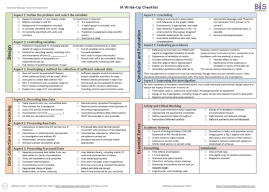
- Click to Download Self-Check rubric
Some things to remember:
1. Read the rubric and use the IA Checklist every step of the way!
2. Make sure you have sufficient, relevant data and associated quantitative data.
3. Don’t let Excel draw lines – it’s rubbish.
4. You must cite all sources of information using the CSE method (the superscripted numbers method which appears in Word as ISO690 Numerical).
5. Check your inbox for Turnitin setup emails and get set up.
–
Don’t forget the things you learned in the Statistical Analysis unit.
The Transport System (Core)
The Transport System (Core)
Essential Biology 6.2: The Transport System (Core)
Click4Biology page here.
And loads of useful links from North Harris College.
————————————————————————————————————————————————–
The Cardiac Cycle:
Hyper Heart animation and graphs from the Chinese University of Hong Kong
Biointeractive from the Howard Hughes Medical Institute
Control of the Heart Beat:
A few good links to try from Washburn Rural High School
And don’t forget the Medmovie resource…
Atherosclerosis and Coronary Heart Disease:
Medmovie has good animations for atherosclerosis, heart attacks and heart bypass surgery. There aren’t many that are better…
Digestion (Core)
New unit – Human Health and Physiology. Try to keep up…
Here is the presentation for the Core section:
Essential Biology 6.1: Digestion (Core)
Class Notes to fill in here (pdf download – A3 size)
–
Some good links:
Enzyme activity animations from McGraw Hill, Northland College and KScience.co.uk
A great animation/tuturial on digestion of different types of foods from kitses.com
And an introduction to absorption(and villi):
–
And, of course, here are JD and Turk to tell us about the diagnostic miracle of egestion:
Not a video, but…
… a great site for visualising data. InformationIsBeautiful.net.

Deadliest infections, from Information is Beautiful
I particularly like these posts:
How safe is the HPV vaccine? (in response to ridiculous scare-mongering news stories)
The Billion-dollar-gram (What is a billion, anyway?)
Ecosystems and Biomes
Final presentation for Option G: Ecology and Conservation uploaded!
Click here for the full unit: Ecology, Evolution and Conservation.
–
Here are the Mighty Boosh telling us why Tundra is dangerous:
Population Ecology
Last topic of the unit! HL Students try to bring together all of the concepts we have learned through the unit when discussing how we can effectively manage our biggest shared resource: the fisheries.
Essential Biology G5: Population Ecology
Read:
Watch:
And don’t forget The Cove.
If you need to review, here is the presentation for Populations from the core:
Conservation of Biodiversity
This one is for the HL students in Option G: Ecology and Conservation.
Essential Biology: G4 Conservation of Biodiversity
Interesting article:
“Should Pandas be left to go extinct?” from the Guardian.
Proteins (AHL & C1)
Although we are learning this in the Chemistry of Life unit, it is actually part of the SL Option C and HL additional material, so look for the book chapters in the right place!
Essential Biology 7.5 & C1: Proteins
Proteins:
Life Cycle of a Protein from Sumanas
Making polypeptides from John Kyrk
Check that you know the different levels of protein structure, including the roles of hydrogen bonds and disulfide bridges. Think about how the properties of the R-groups on amino acids cause the protein to fold up in a set configuration.

FoldIt!
Make sure you can give examples of fibrous and globular proteins and that you can name some examples of uses of proteins that are not structural or related to the plasma membrane.
And don’t forget to play FoldIt – the brilliant protein puzzle that helps medicine!